Wondrfly's Trust Shift
Increased parent confidence, drove provider connections, and unlocked revenue growth by designing a trust-building system for providers.
The Problem: High Intent, Low Connection
Result: Clients viewed programs but didn't click "Connect."
Imagine landing on Wondrfly's Discover page, browsing several program cards, and opening one that looks like a good fit. In theory, the next step should be easy: click the primary CTA and start a conversation with the provider. But that wasn't happening.
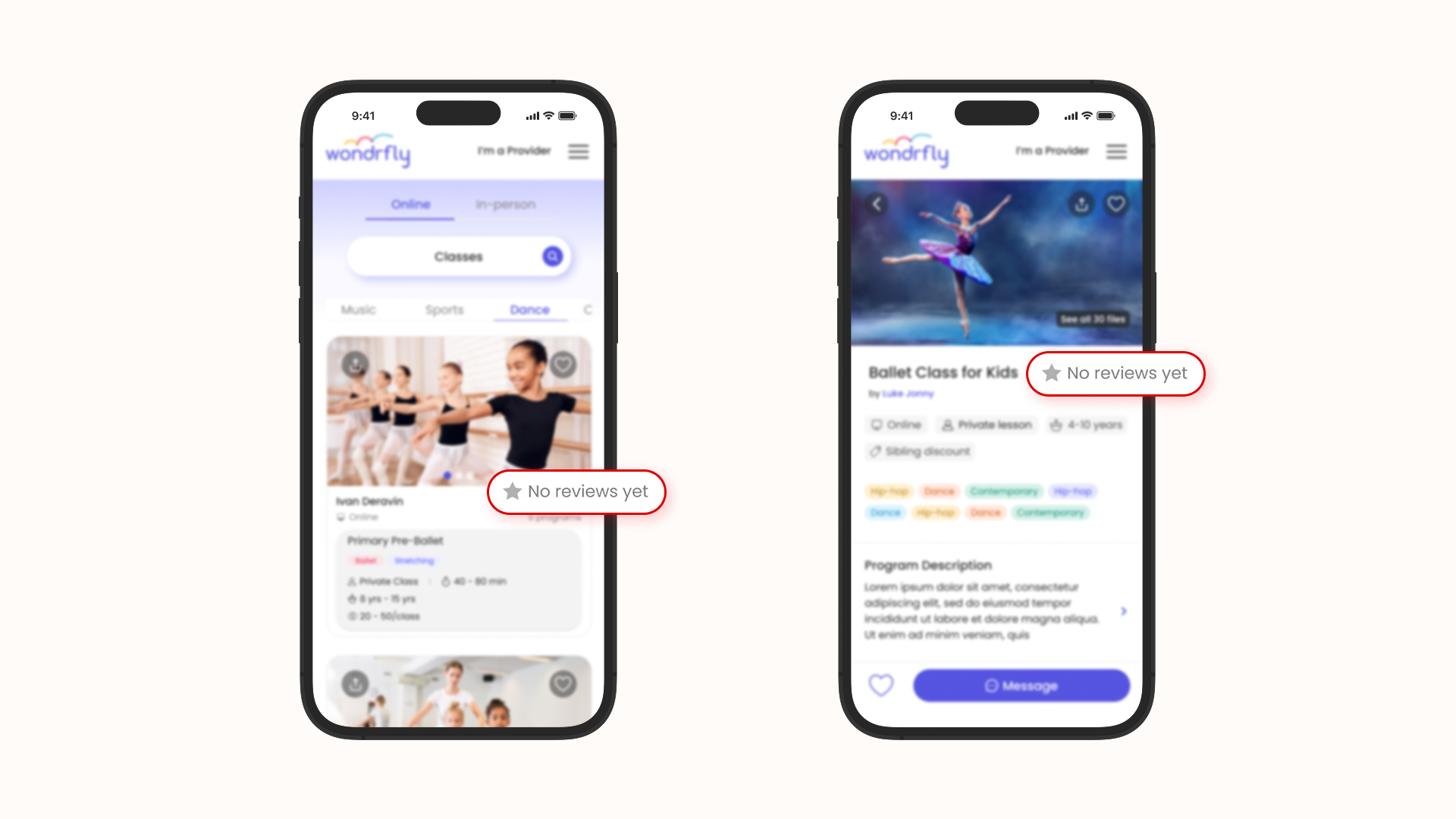
Over several months, I noticed a consistent drop-off between users viewing program cards / pages and clicking the primary CTA to connect. Despite providers having strong descriptions, quality content, and clear offerings, users hesitated and left. The core issue surfaced quickly:
- Providers were labeled as "No reviews yet"
- The same messaging appeared on both program cards and program detail pages
Instead of being neutral, these badges actively discouraged clients from continuing.
Why This Mattered
Result: Trust was broken at the exact moment of decision.
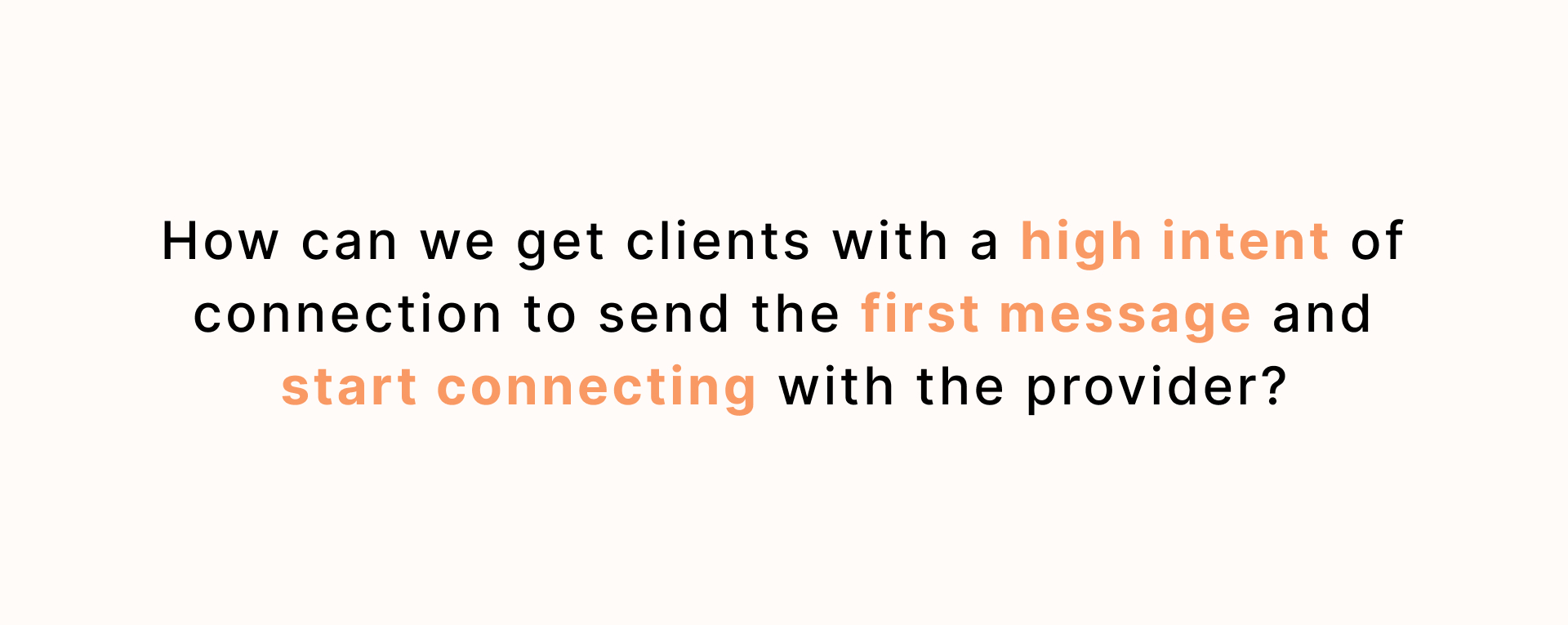
This wasn't just a UI issue — it was a business problem. The product experience was unintentionally creating doubt for clients who already had high intent. The key question became:
Research & Insights
What Clients Look for Before Clicking "Connect"
Result: Reviews emerged as the strongest trust signal.
I set out to understand what information clients felt was missing at the moment of decision. Key research questions:
- What stops clients right before clicking "Connect"?
- What signal makes them feel safe reaching out to a provider?
- What reduces hesitation in high-intent scenarios?
To move fast and reduce cost, I ran multiple AI-simulated usability tests alongside qualitative analysis. The focus was on user behavior right before the primary CTA. The insight was clear and consistent:
- 85% of clients actively look for reviews before initiating a connection
- Reviews were seen as proof of legitimacy, not just quality
- "No reviews yet" messaging increased doubt instead of reassurance
This revealed the missing piece in the journey: a clear, positive credibility signal.
 (1).jpg)
Strategy: Shifting From Absence of Proof to Proof of Trust
Result: A system-level solution instead of a cosmetic fix.
The root problem wasn't just that providers didn't have reviews — it was that:
- Providers had no way to collect reviews
- The UI framed "no reviews" as a negative signal
- Trust was not designed as a progression
I decided to design a Trust-Building System, not just a reviews feature. The strategy focused on three principles:
- Enable providers to actively generate social proof
- Highlight trust where it matters most in the journey
- Remove negative signals when proof doesn't exist yet
 (5).jpg)
Designing the Trust-Building System
Result: Providers gained a clear path to credibility.
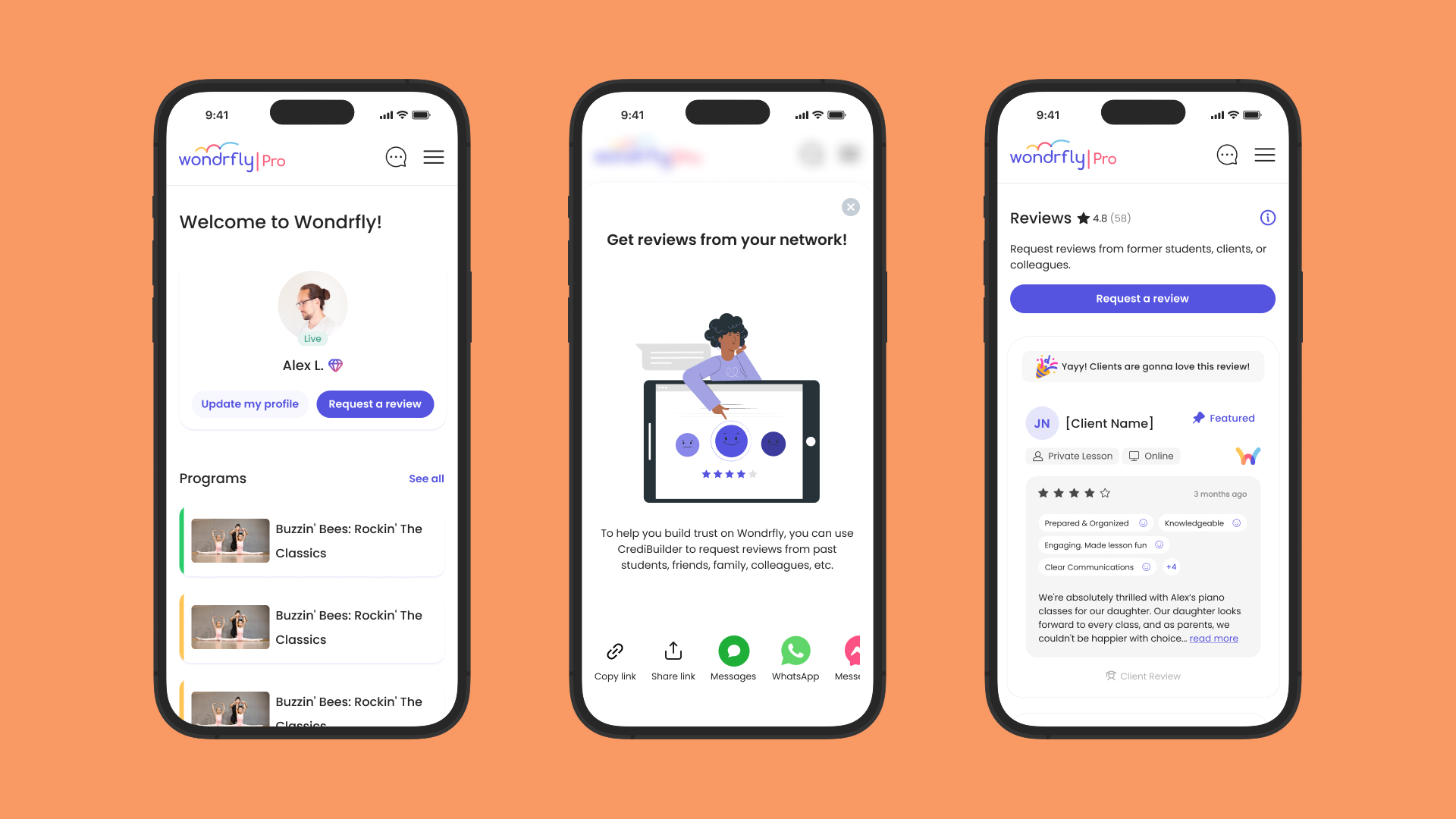
I designed a structured system that allowed providers to:
- Request reviews from their existing clients and network
- Collect feedback through a simple, guided flow
- Build credibility over time without friction
This shifted trust-building from a passive outcome to an intentional action.
Featured Reviews & Testimonials
Result: Stronger social proof at key decision points.
Once providers started receiving reviews, I introduced a second layer of trust: Featured Reviews. Providers could highlight their strongest testimonials directly on program pages. These were:
- Immediately visible
- Contextual to the program
- Designed to support quick scanning and confidence
This helped clients validate their decision faster and increased the likelihood of connection.
.jpg)
Impact & Outcomes
Result: Trust translated directly into engagement and revenue.
The Trust-Building System became one of the highest-leverage MVP features on Wondrfly. Key wins:
- Increased MAP: More clients engaged with program pages and initiated conversations
- Increased VBT: Stronger trust signals led to more Valuable Business Threads (real lead-generating conversations)
- Revenue Growth: The system contributed directly to 60% revenue growth, even while the platform remained in MVP
 (1).jpg)
Solving for Providers Without Reviews
Result: Removed discouragement without hiding credibility.
Not all providers would have reviews right away. To avoid repeating the original problem, I redesigned the parent-facing layout:
- Removed the "No reviews yet" badge entirely
- Introduced a Verified Provider badge as a neutral trust signal
- Maintained credibility without creating doubt
This ensured that lack of reviews no longer worked against providers early on.
.jpg)
Learnings
Designing the Trust-Building System reinforced a core belief of mine: small, focused product decisions can unlock outsized impact. Key takeaways:
- Trust must be designed, not assumed
- Diagnosing the real problem saves time and effort later
- Product decisions should always connect UX to business outcomes
This project taught me to think beyond UI — to design systems that influence behavior, confidence, and revenue. It also strengthened my approach to presenting vision work to leadership by clearly tying design choices to measurable impact.
Ultimately, this work shaped how I approach product design today: listen first, observe deeply, and solve the right problem — not just the visible one.