Wondrfly Pro 0→1 Marketplace Launch
Transformed a passive directory into a scalable marketplace with a clear monetization strategy by building a 0-to-1 revenue-generating MVP.
Context: A Product With No Business
When I joined, Wondrfly Pro existed as a passive directory built years earlier. Providers were listed, but clients could contact them directly outside the platform—meaning zero revenue and no incentive for providers to engage.
There was no active roadmap, no monetization logic, and no clear product ownership. I saw this as a missed opportunity to turn an abandoned product into a real business.
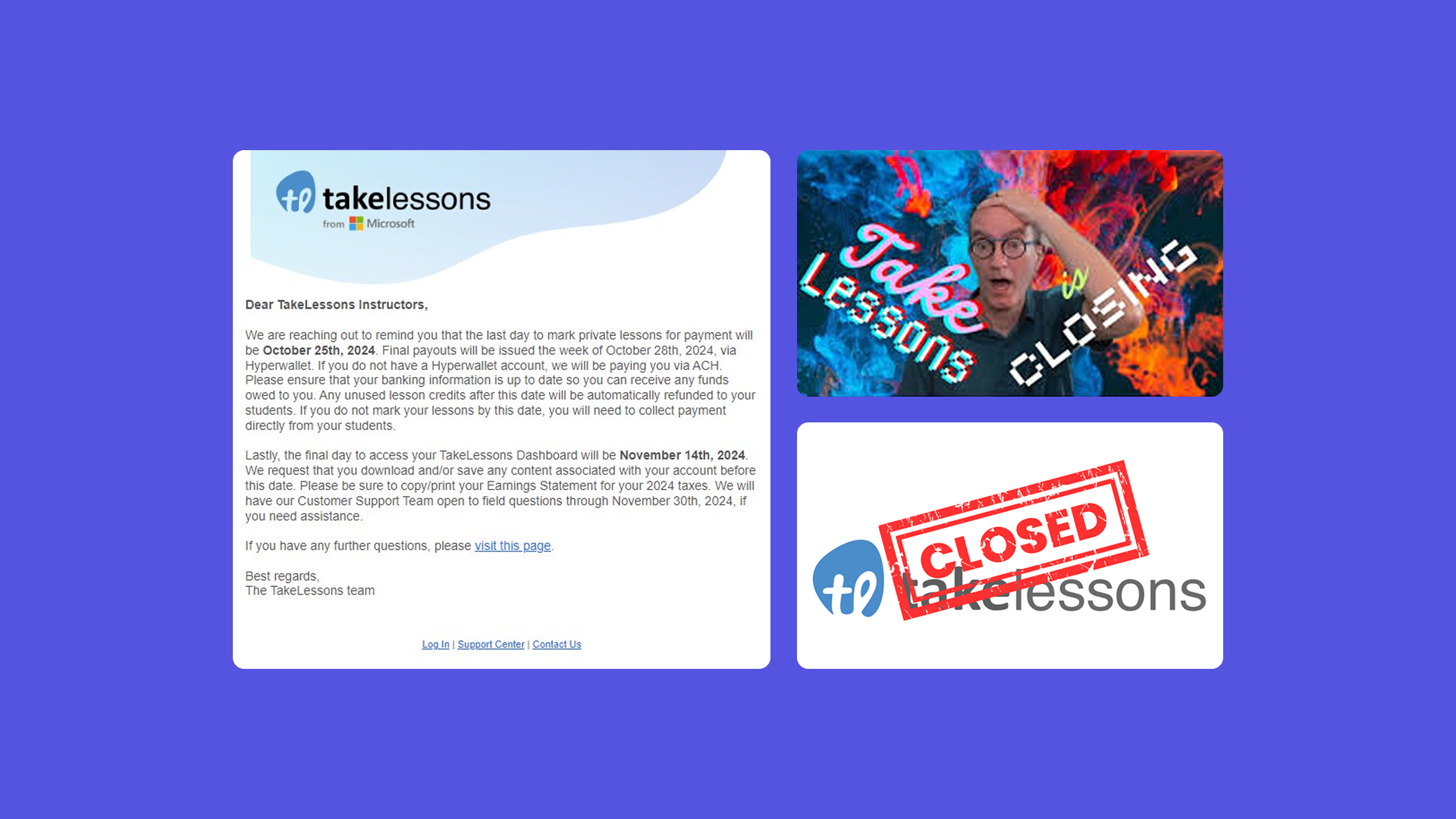
The turning point came when a major U.S. platform, TakeLessons, shut down. I identified this moment as a rare market opening and led the effort to rethink Wondrfly Pro from the ground up.
Phase 1: Early Market Intelligence & Validation
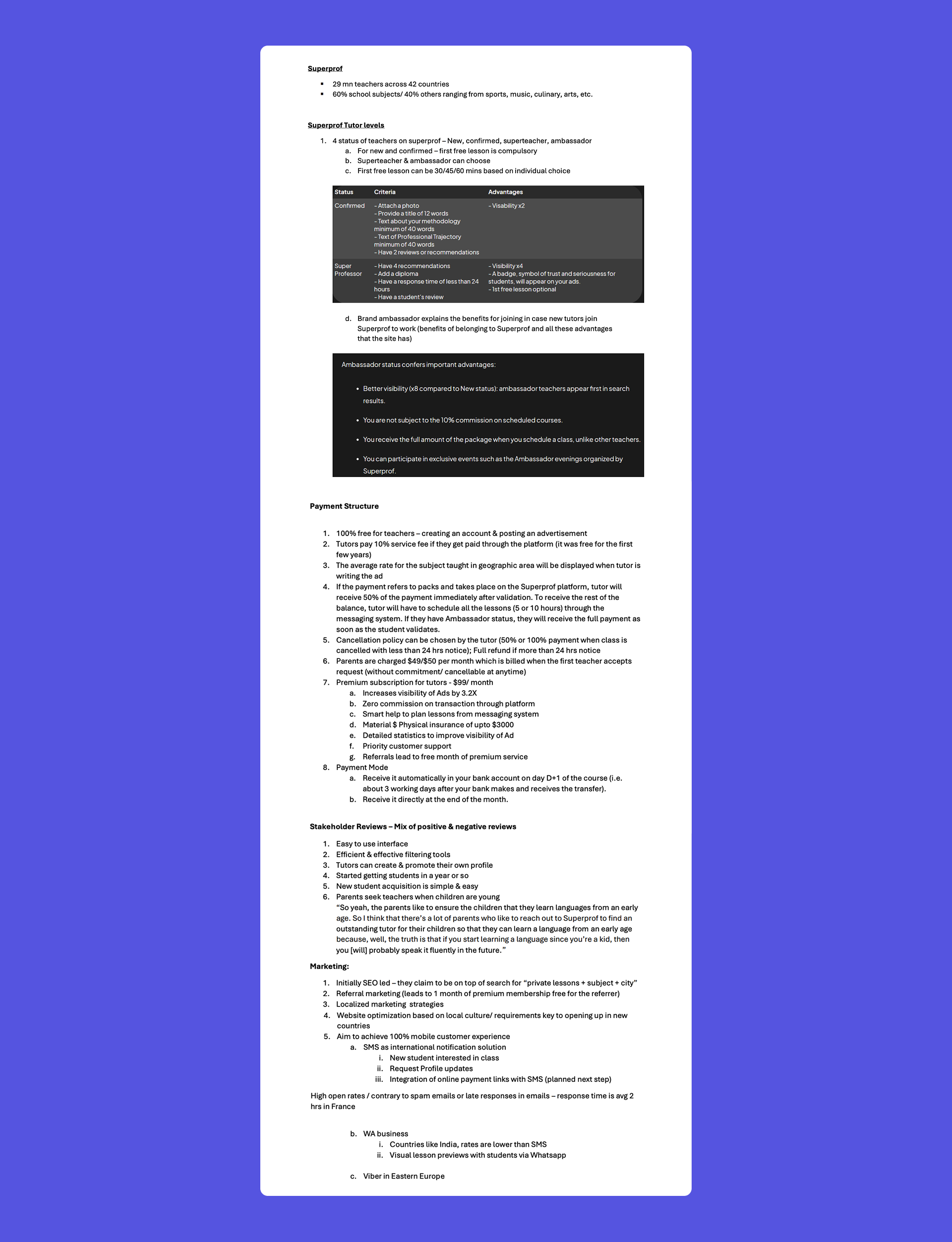
Understanding Why a Giant Failed
Before designing any flows or screens, I focused on understanding the market failure itself.
Through deep competitor and business analysis, one issue stood out clearly:
- The competitor relied on high commission fees per lesson.
- Providers felt punished for success.
- To stay profitable, they moved clients off-platform after a few sessions.
This "platform leakage" made long-term retention impossible.
Provider Interviews: Pre-Design Insights
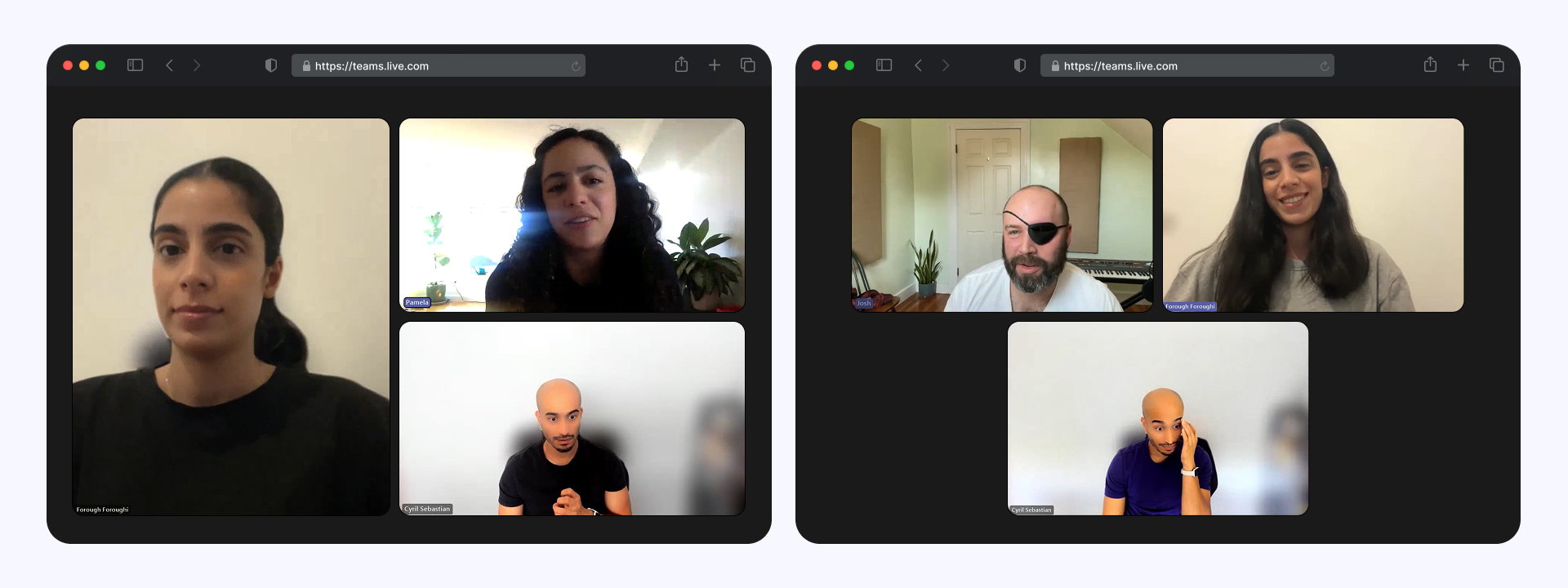
I conducted early interviews with providers—many impacted by the shutdown—to validate whether this failure reflected a real market gap.
Key early insights:
- Providers valued discovery and leads, even on poorly designed platforms.
- They strongly rejected commission-based models.
- They were willing to pay for connections, not per-hour fees.
These findings directly informed the initial business plan and monetization strategy.
Strategic Shift: From Transactions to Connections
The early research led to a clear strategic decision:
Wondrfly Pro should not monetize lessons. It should monetize discovery.
I proposed and defined a subscription-based, connection-first business model that:
- Removes commissions entirely
- Gives providers full control over pricing and clients
- Creates predictable, fair revenue for the business
This decision became the foundation for the first version of the product architecture.
Designing the Business Logic
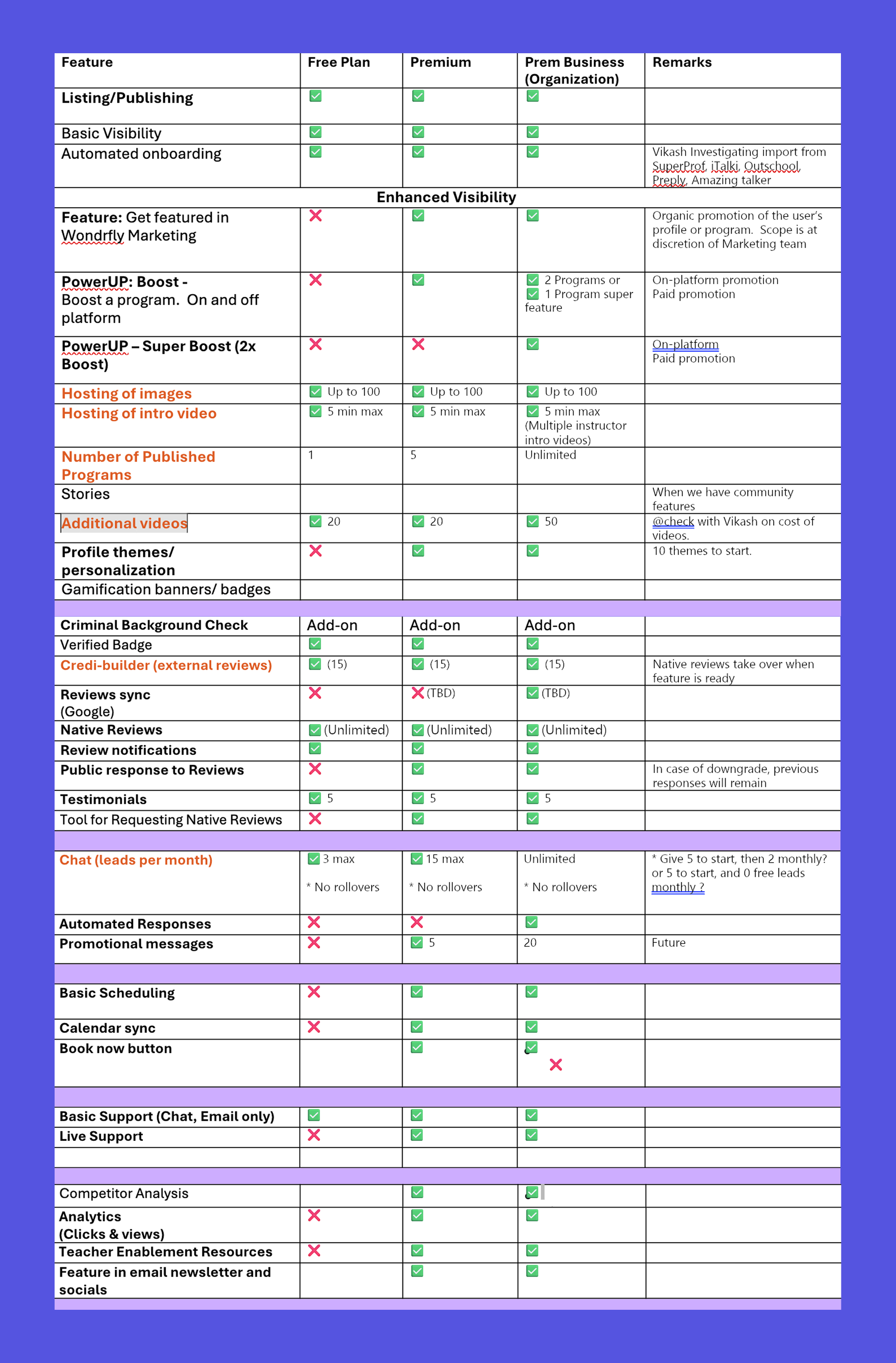
Business Plan & Value Proposition
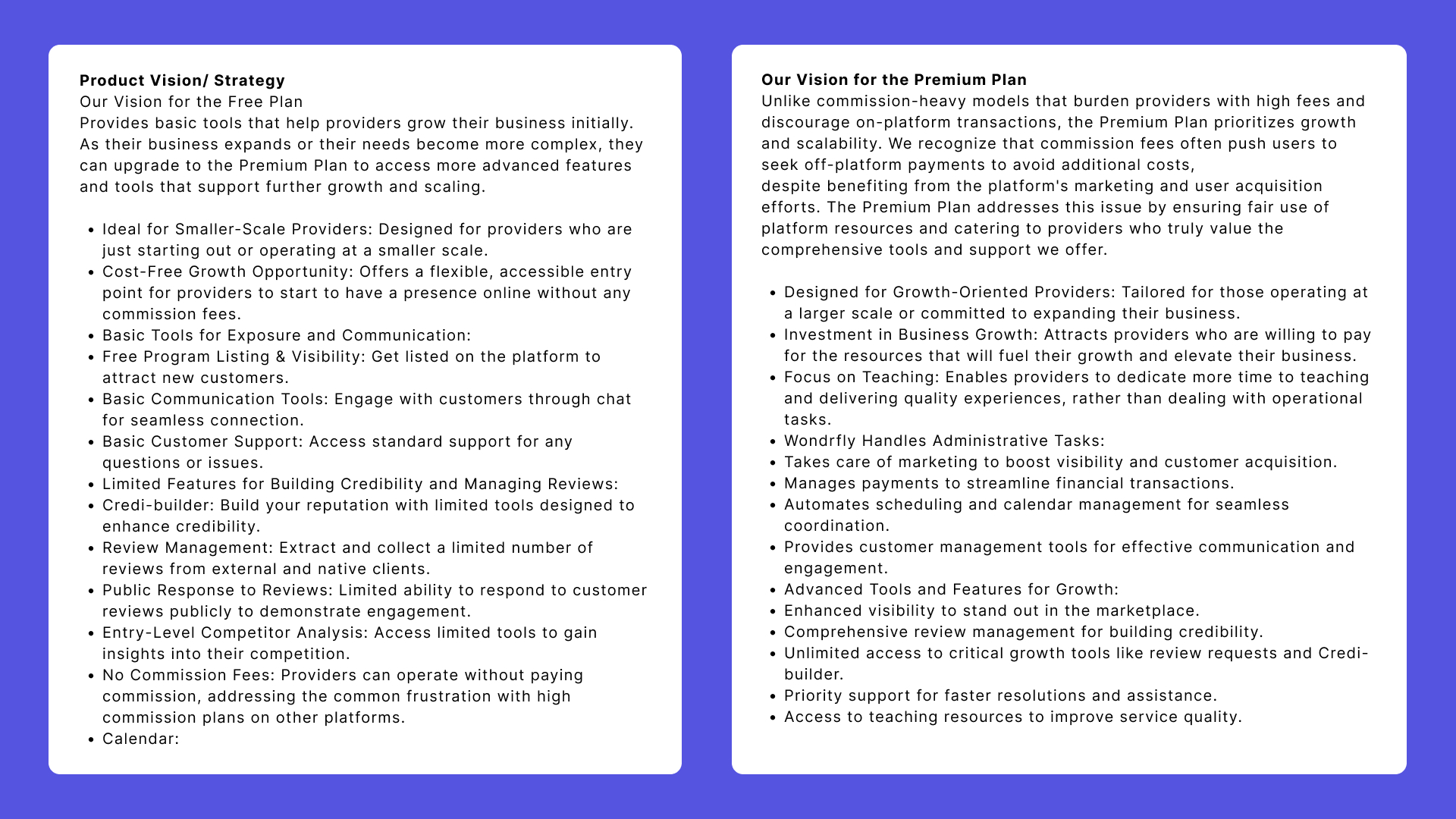
I positioned Wondrfly Pro as a growth partner, not a gatekeeper.
Core value proposition:
- Zero commissions
- Provider autonomy
- Transparent pricing
- Direct access to leads
Competitive Hooks
To win early adopters, I designed three strategic advantages:
- Import & Claim — Providers could instantly claim and import their existing profiles and reviews from third-party platforms.
- Program-First Design — Publishing a program became the platform's "North Star" for discovery and revenue.
- Direct Connections — Providers retained full ownership of client relationships.
Monetization Strategy
Subscription Architecture
I designed a clear, scalable monetization framework with two tiers:
Starter (Free)
- Go live on the platform
- Receive a limited number of leads
- Experience real value before paying
Growth (Premium)
- Fixed monthly fee
- Higher lead volume
- Advanced discovery tools
- Profile and visibility boosts
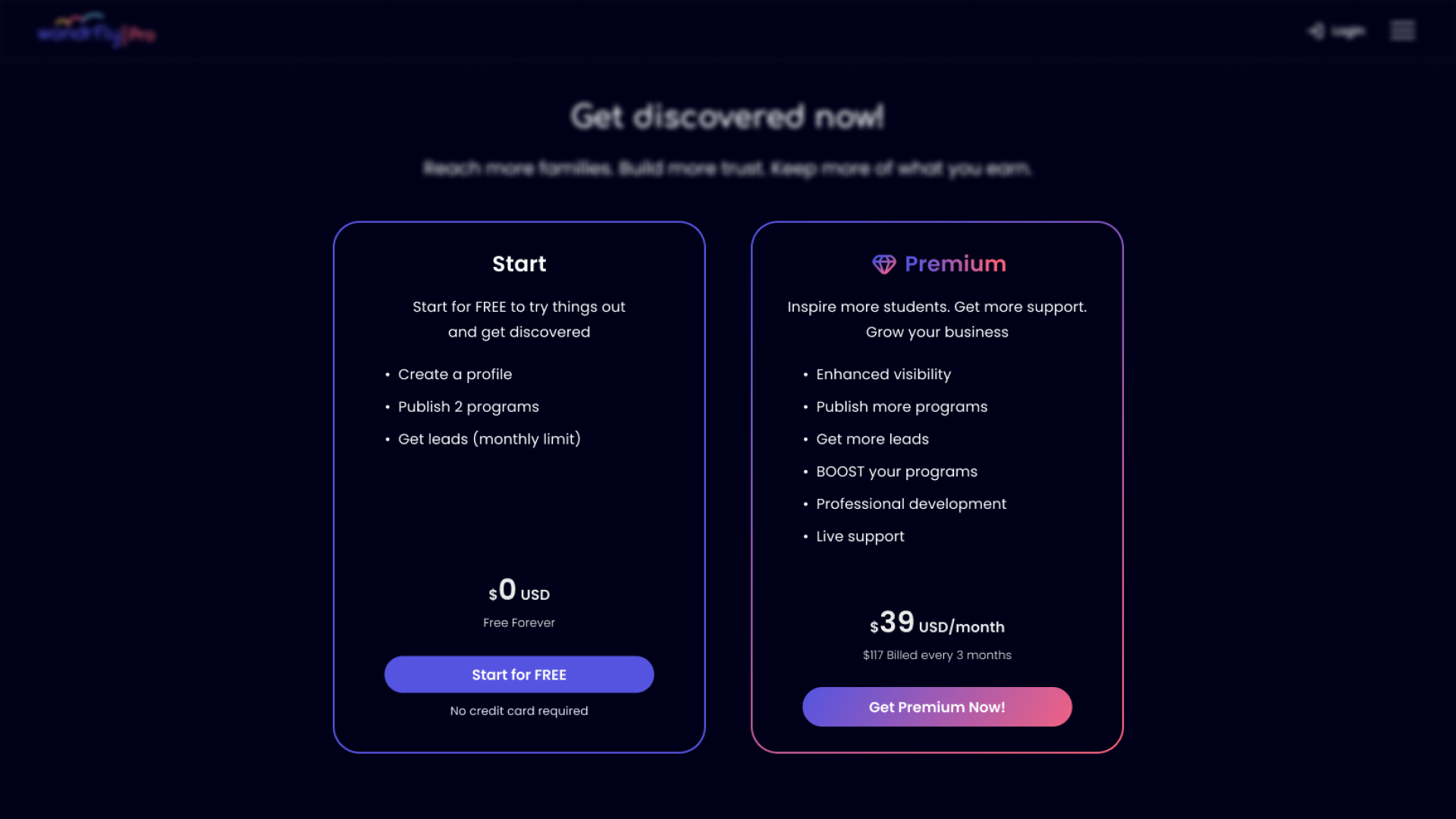
This structure aligned provider growth with business revenue while preventing platform leakage.
Product Architecture: Building the Ecosystem
As the sole product designer, I architected the full system end-to-end.
Core Systems
- Frictionless Onboarding & Data Migration
- High-Conversion Program Creation (pricing, scheduling, multi-location)
- Unified Lead & Messaging Center
- Subscription & Monetization Portal
Managing Complexity
I designed dynamic states across:
- Provider lifecycle (inactive → pending → live)
- Subscription access and permissions
- Cross-module consistency across 40+ flows
Product Flows & System Coverage
Instead of breaking the work into low-fidelity and high-fidelity stages, I chose to present the product through its major end-to-end flows. Given the scope of the platform (12+ modules and 40+ flows), showing isolated wireframes would not reflect how the system actually works in practice.
This section highlights the core journeys that power the marketplace, from first touch to revenue:
- Provider onboarding & account setup
- Program creation (pricing, scheduling, formats)
- Lead intake, messaging, and connection management
- Subscription & monetization flows
- Visibility, boosts, and growth actions
These flows were designed, tested, and refined as connected systems rather than standalone screens, ensuring logical consistency across states, plans, and user types.
.jpg)
Phase 2: Post-Design Research & Iteration
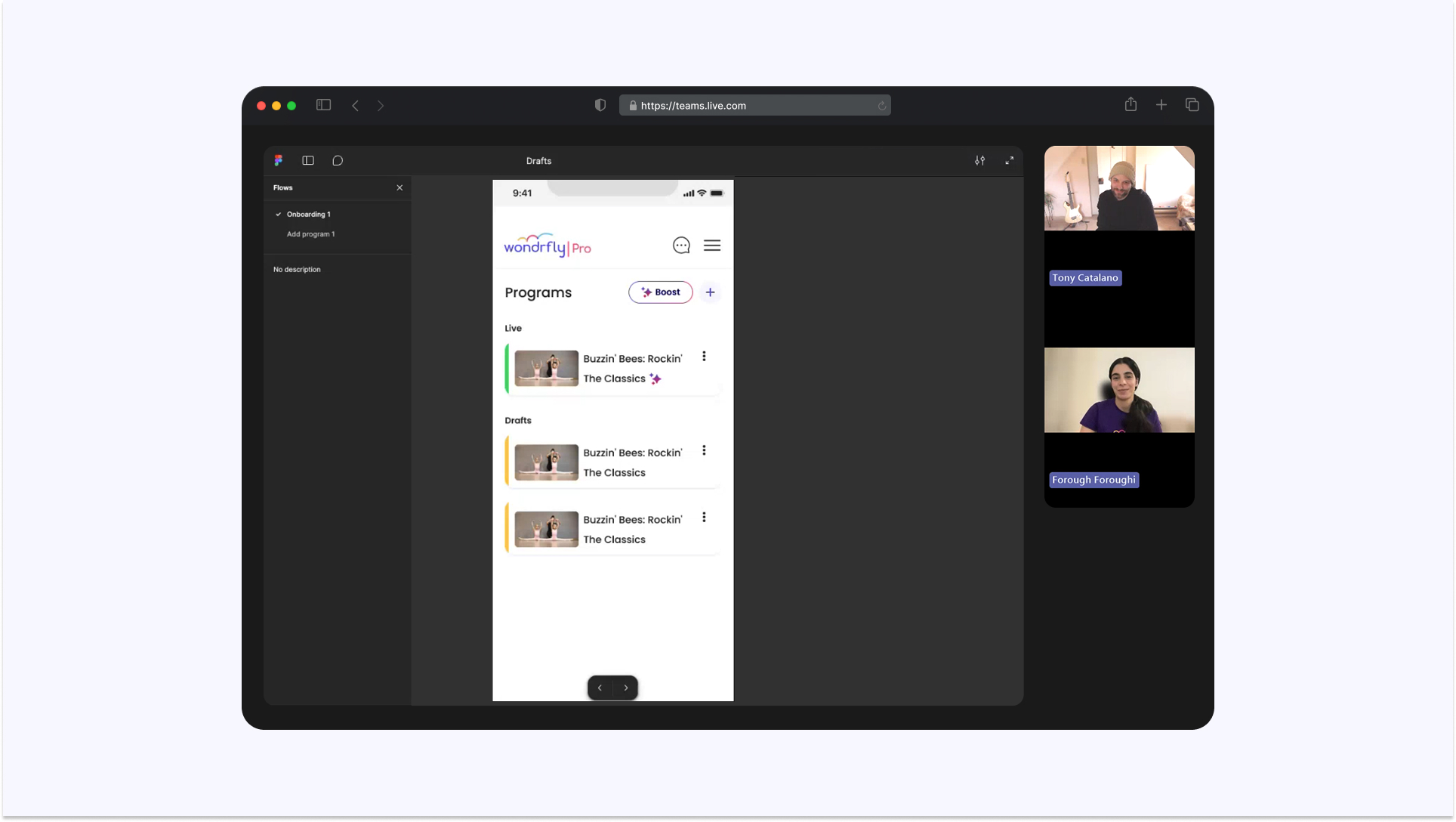
Once the core flows were designed and released, I returned to research—this time grounded in real usage.
Post-Launch Interviews & Behavioral Insights
I ran follow-up interviews with providers who had completed onboarding and started receiving leads.
New insights emerged:
- Some providers needed more visibility, not more features.
- Others wanted flexibility without committing to fixed monthly plans.
- Client-side trust signals directly affected lead quality.
These findings led to targeted improvements across monetization, visibility, and client conversion.
.jpg)
Impact & Results
- 65% of providers went live on their first visit
- Strong early satisfaction and positive feedback
- First real revenue system successfully launched
Continuous Iteration & Growth
Post-launch, I continued analyzing behavior and iterating.
Client-Side Optimization
- Improved trust and conversion on the client journey
- Introduced calendar integrations and intro sessions
Monetization Pivot
Data revealed a clearer model:
- Providers publish programs for free
- They pay only for Program Boosts when they want visibility
This shift led to +60% growth in connections and provider satisfaction.
Reflection
This project defines how I work.
I don't design screens in isolation. I design systems, business models, and behaviors. Wondrfly Pro challenged me to think end-to-end—from market failure to monetization logic to UI execution—and proved that thoughtful product design can turn a neglected idea into a real, scalable business.
Team & Collaboration
This project means more to me than just the product we built. As a solo designer, I helped shape the direction, worked side-by-side with founders and engineers, and aligned every decision with real business goals. Along the way, I also had the chance to mentor junior designers, growing not only the product, but the people around it.
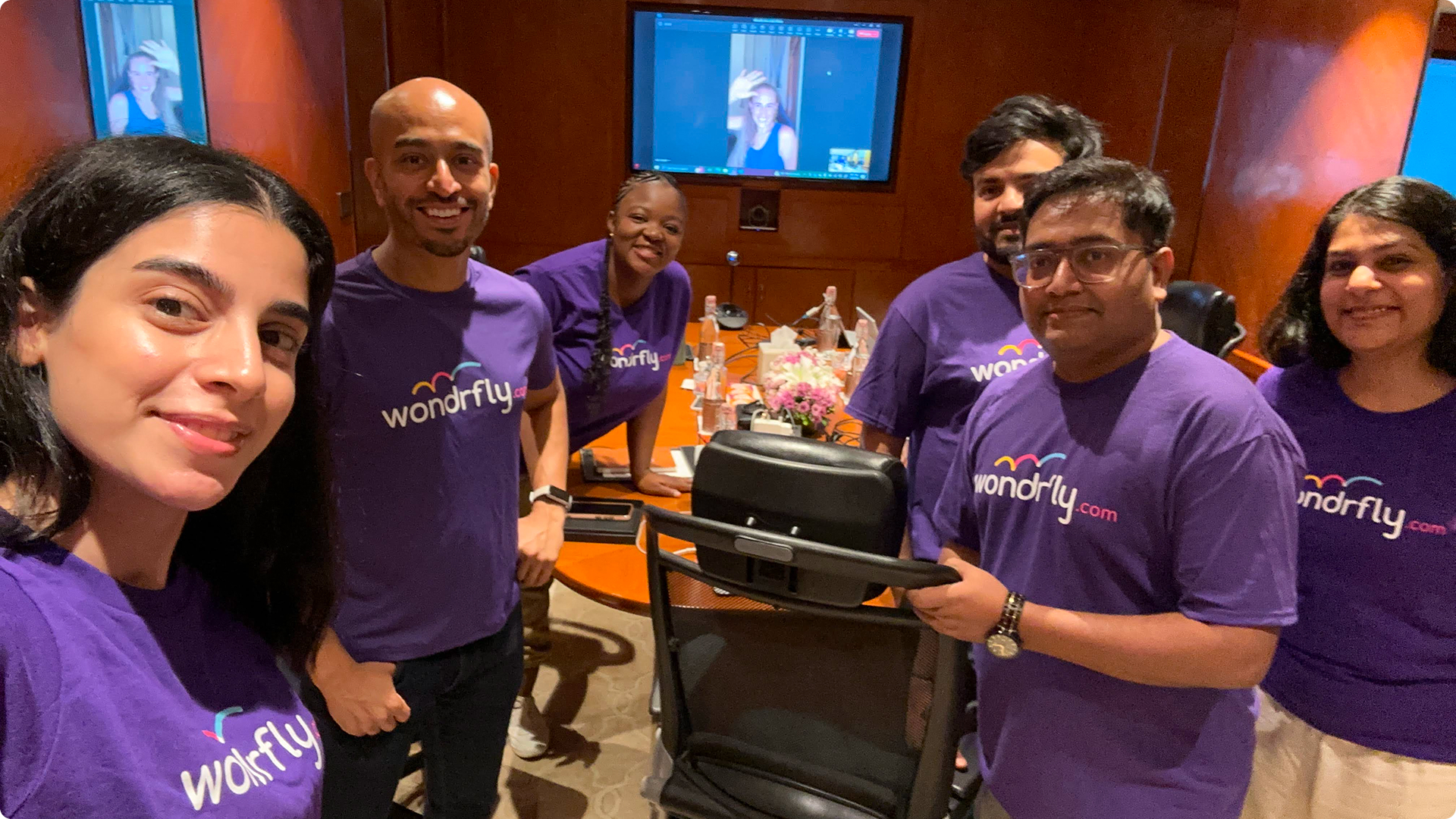
It challenged me, stretched me, and deepened my love for collaborative teamwork. The product continues to evolve through real user behavior—and this is the team that made it all possible.